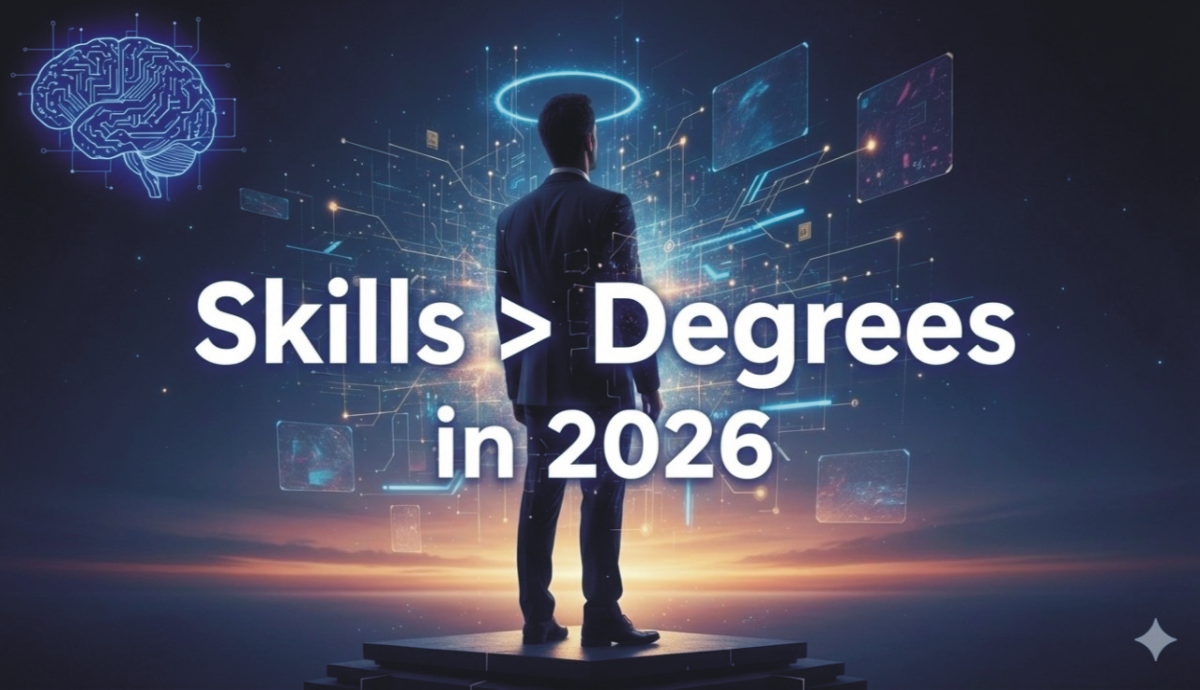
Skills vs Degree: What Matters More in 2026?
For decades, students were told one simple rule: get a good degree and success will follow. Today, that rule no longer works the way it used to. In 2026, students are entering a job market that looks very different from what their parents experienced.
Companies are changing how they hire. Technology is replacing routine jobs. Remote work is creating global competition. As a result, many students are now asking an important question:
Do skills matter more than a degree in 2026?
The honest answer is not extreme—it is strategic.
Why the Debate Between Skills and Degrees Exists
The debate exists because many graduates:
- Have degrees but struggle to find jobs
- Lack practical, job-ready skills
- Feel unprepared for real-world work
At the same time, many self-taught individuals with strong skills are getting jobs, freelance clients, and remote opportunities—sometimes without a degree.
This shift has forced students to rethink what really matters.
What a Degree Still Represents in 2026
A degree is not useless. It still offers important benefits.
What a Degree Provides:
- Structured learning
- Academic foundation
- Discipline and consistency
- Access to internships and networks
- Eligibility for regulated professions
Fields like medicine, law, engineering, and academia still require formal degrees.
A degree proves that you can commit, learn, and complete a long-term goal.
The Limitations of a Degree Alone
The problem is not degrees—it is degrees without skills.
Many students graduate with:
- Theoretical knowledge
- No practical experience
- No portfolio or projects
- No understanding of how their field works in practice
In 2026, employers no longer assume a degree means competence.
They want proof.
What Skills Represent in 2026
Skills represent value.
A skill is your ability to:
- Solve real problems
- Use tools and technology
- Create results
- Adapt to change
Skills show what you can do, not just what you studied.
Why Skills Are More Important Than Ever
1. Employers Hire for Skills First
Many employers now prioritize:
- Practical ability
- Experience
- Problem-solving
- Results
Job descriptions often say:
“Degree preferred, but skills and experience required.”
2. Skills Create Income Opportunities Faster
With skills, students can:
- Freelance
- Work remotely
- Start side hustles
- Earn before graduation
Degrees usually pay off later. Skills can pay off now.
3. Skills Are Portable and Global
Skills work everywhere.
A student with digital skills can work:
- Locally
- Remotely
- Internationally
Degrees are often location-specific. Skills are universal.
4. Skills Adapt to Change
Technology evolves fast. Skills can be upgraded quickly.
Degrees take years to change.
In 2026, adaptability is survival.
Examples of High-Value Skills in 2026
Students who develop these skills gain an advantage:
- Web development
- Cybersecurity
- Data analysis
- Digital marketing
- UI/UX design
- Content creation
- AI-related skills
- Communication and critical thinking
These skills cut across industries.
Skills vs Degree: A Clear Comparison
| Degree | Skills |
|---|---|
| Takes years to earn | Can be learned in months |
| Mostly theoretical | Mostly practical |
| Good for structured careers | Good for flexible careers |
| Slower income return | Faster income potential |
| Hard to update | Easy to upgrade |
So, What Matters More in 2026?
The real answer is skills first, degree second.
A degree without skills struggles.
Skills without a degree can succeed.
Skills with a degree dominate.
The smartest students in 2026:
- Get a degree (when possible)
- Build practical skills alongside it
- Gain experience early
- Create portfolios and projects
What Students Should Do Right Now
1. Stop Waiting Until Graduation
Start learning skills now.
2. Choose Skills That Match Your Interests
Skills stick better when you enjoy them.
3. Build While You Learn
Projects matter more than certificates.
4. Use Your Degree Strategically
Let your degree open doors, but let your skills keep you inside.
The Role of StudentVocation.com
StudentVocation.com helps students:
- Understand modern career requirements
- Identify high-value skills
- Learn alongside their degree
- Prepare for real-world opportunities
The platform focuses on employability, clarity, and income readiness.
Final Thoughts
In 2026, the question is no longer skills vs degree.
The real question is:
What value can you provide?
Degrees explain what you studied.
Skills prove what you can do.
Students who understand this early will not struggle after graduation—they will lead.