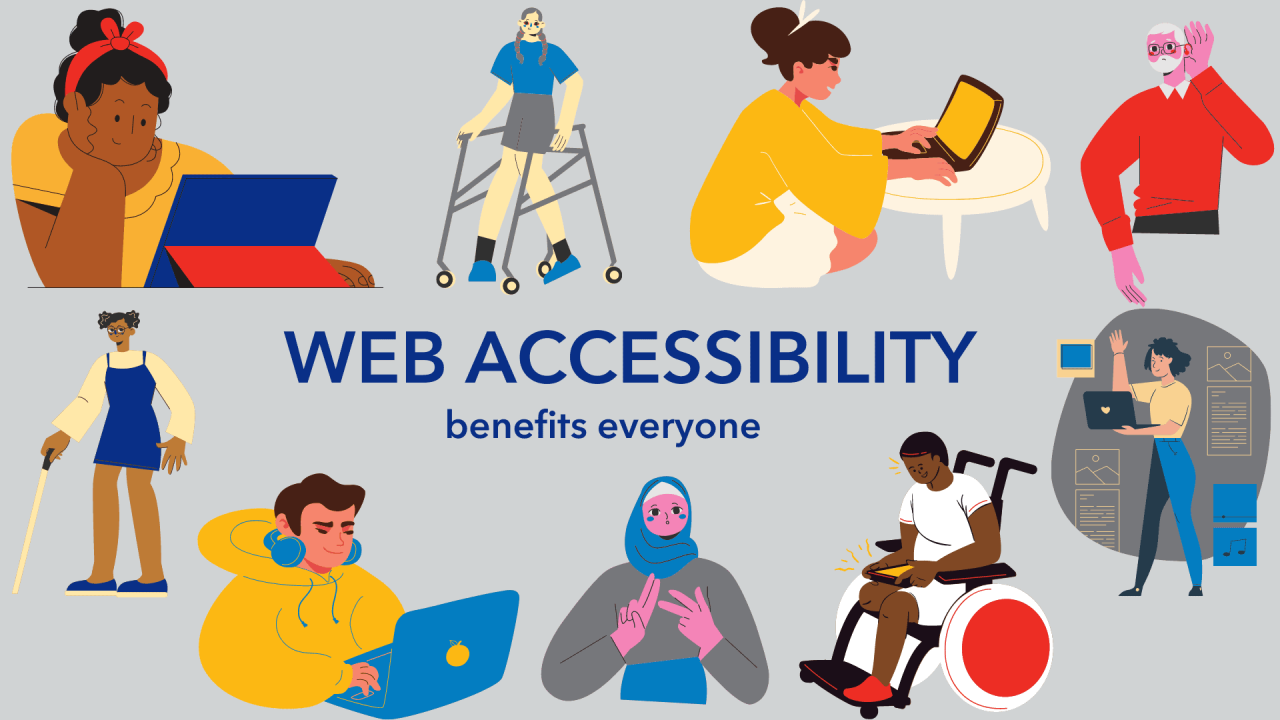
Introduction to Web Accessibility: Designing for Everyone
Web accessibility ensures that websites, tools, and technologies are designed and developed so that people with disabilities can use them effectively. This encompasses a wide range of disabilities, including auditory, cognitive, neurological, physical, speech, and visual impairments .W3C
Why Web Accessibility Matters
Accessible web design is crucial for:
-
Inclusivity: Ensuring that all users, regardless of ability, can perceive, understand, navigate, and interact with the web.W3C
-
Legal Compliance: Meeting international standards and regulations, such as the Web Content Accessibility Guidelines (WCAG) .Wikipedia+1B.C. Open Collection by BCcampus+1
-
Enhanced User Experience: Improving usability for everyone, including those using mobile devices or with temporary impairments.
Core Principles of Web Accessibility
The WCAG outlines four key principles, often abbreviated as POUR:Wikipedia+3WebAIM+3WIRED+3
-
Perceivable: Information and user interface components must be presentable to users in ways they can perceive.
-
Operable: User interface components and navigation must be operable.
-
Understandable: Information and the operation of the user interface must be understandable.
-
Robust: Content must be robust enough to be interpreted reliably by a wide variety of user agents, including assistive technologies .
Implementing Accessible Design
To create accessible websites:
-
Use Semantic HTML: Properly structured HTML helps assistive technologies interpret content correctly.WIRED+1Open Education+1
-
Provide Text Alternatives: Include alt text for images and transcripts for audio/video content.
-
Ensure Keyboard Accessibility: All functionality should be available via keyboard navigation.
-
Design with Sufficient Contrast: Ensure text is readable against background colors.
-
Implement ARIA Landmarks: Use Accessible Rich Internet Applications (ARIA) roles to enhance navigation for assistive technologies .WIRED
Learning Resources
For those interested in delving deeper into web accessibility:
-
W3C’s Introduction to Web Accessibility: Provides a comprehensive overview of accessibility principles and practices .W3C
-
Open Textbook on Web Accessibility: Offers interpretations of WCAG 2.1 guidelines tailored for general audiences .pressbooks.library.torontomu.ca+3B.C. Open Collection by BCcampus+3pressbooks.library.torontomu.ca+3
-
Free Online Course by W3C: A self-paced course covering the foundations of digital accessibility .W3C
By embracing these principles and resources, designers and developers can create inclusive digital experiences that cater to the needs of all users.